TL;DR: Most AI fitness apps store workout data but never act on it. A single missed rep in your last session is the fastest way to find out whether an AI coach actually read your data — or just filed it. Closed-loop progression, where each session directly informs the next decision, is what separates a real AI coach from a templated plan with your name on it.
59% of people use AI for fitness questions, yet only 4% strongly trust AI health advice — because most systems store data without acting on it.
The five-second test: log a session with missed reps, then check whether the next workout responds to that specific miss.
Apps that fail this test are filing cabinets, not coaches.
Closed-loop progression — session in, decision out — is the architecture behind genuine AI coaching.
Trust builds one session at a time, through demonstrated responsiveness to real numbers, not published accuracy claims.
What Is the Core Problem With AI Fitness Coaching?
One sentence tells me whether an AI coach understood a training session.
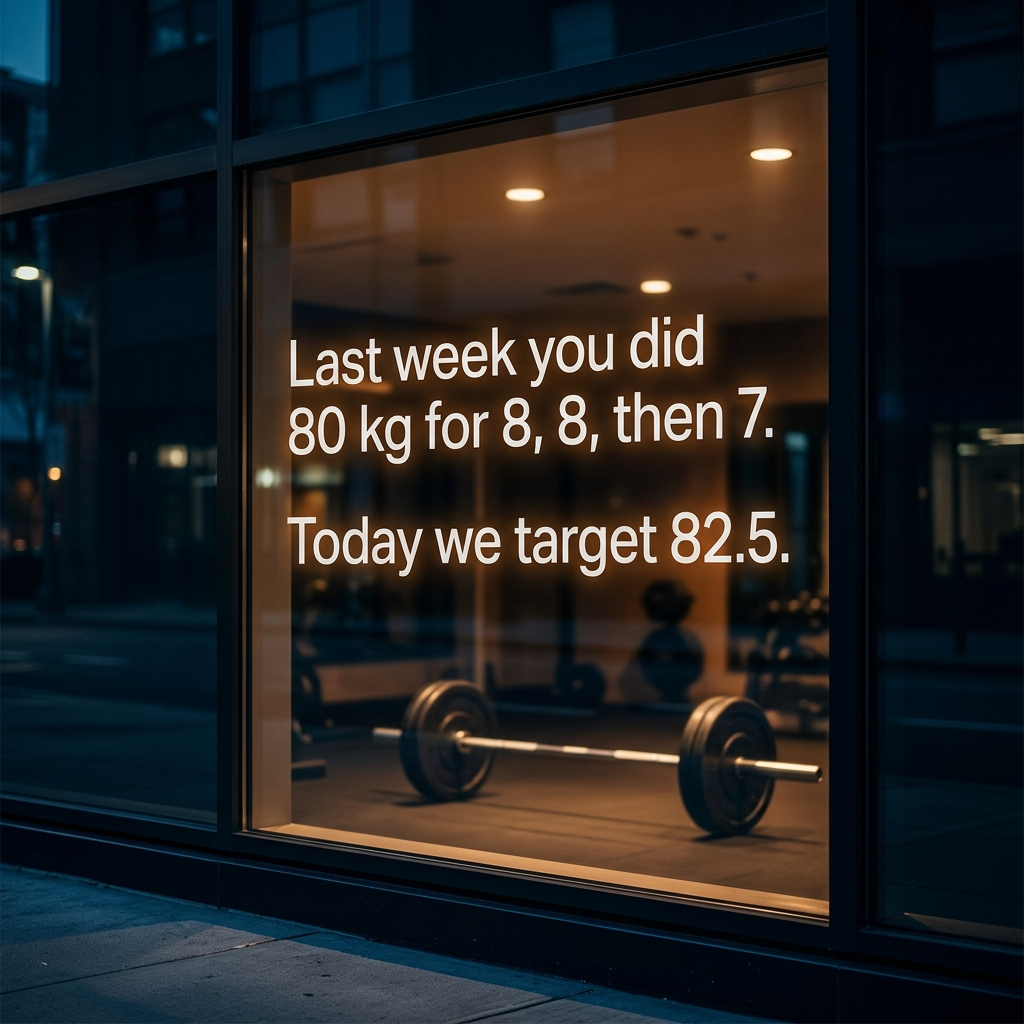
"Last week you did 80 kg for 8, 8, then 7. Today we target 82.5."
A system that produces that sentence read the previous session. It noticed the third set dropped a rep. It made a specific decision based on that specific miss.
Most fitness apps hold that same data and leave it untouched. You get a chart. The chart sits there. You still decide what tomorrow should look like — which was the entire reason you wanted a coach.
I build FitPocket, an AI training system, and I spend most of my time on this exact problem. The gap between storing data and acting on data explains almost everything about why people distrust AI coaching. It also explains how to fix it.
Key Point: The failure is not a data problem. It is a response problem. Stored data that goes unread produces no coaching.
Why the Distrust Is Earned
The numbers around AI fitness tools describe a strange situation. Around 59% of people used AI for nutrition or exercise questions in the past 30 days, yet only 4% strongly trust the accuracy of AI-generated health information.
People use these tools while openly admitting they distrust them.
That skepticism comes from repeated experience: volume recommendations that ignore last week entirely, progression schemes pulled from nowhere, advice delivered with total confidence and zero grounding in actual history.
The language models themselves confirm the pattern. When a fitness coach pressed Claude AI on this, the model responded:
"I don't experience uncertainty the way you do. A human coach who's unsure will often feel unsure. I generate confident-sounding text regardless of whether the underlying claim is solid or not."
Confidence without accountability to performance data. That is the core failure — and users feel it even when they lack the vocabulary to name it.
Key Point: The trust deficit is a product of systems that generate confident advice without reading the user's actual performance record.
Why Retention Data Points to a Design Failure
Fitness apps retain roughly 3 to 4% of users at day 30. Around 77% of daily users abandon within three days of installation.
The industry reads these numbers as a motivation problem. I read them as an infrastructure problem.
The abandonment research supports this. Users cite generic content, unclear value, and plans that ignore real schedules. Consumer surveys list lack of personalization among the top barriers to AI fitness adoption, at 35%.
These users logged their sessions. They tracked their reps. The system filed the information and printed whatever was already scheduled.
Nobody sustains a relationship with a filing cabinet.
Key Point: Churn is not a willpower failure on the user's part. It is a system failure — the app collected data and did nothing with it.
How to Run the Five-Second Test on Any AI Coach
Here is a test that takes five seconds. I encourage people to run it on any product, mine included.
Log a session where you miss reps on the last set.
Open the next workout.
Check whether it responds to that specific miss.
One screen tells you everything. A system that read your session adjusts the load, holds it steady, or explains the change with reference to your actual numbers. A system that only stored your session prints week 4 of a pre-written template with your name on it.
Most fitness apps fail this test. Repetitive, unresponsive routines are a documented driver of abandonment — with roughly 16% of users citing them as a primary reason for quitting.
The test works because it checks for one thing: a causal link between what you did and what the system decides next.
Key Point: One missed-rep session is sufficient to determine whether an AI coach is reactive or merely scheduled.
What Is Closed-Loop Progression and How Does It Build Trust?
The technical term for the fix is a closed feedback loop. The engineering definition describes leveraging system output and end-user actions to retrain and improve the model over time. Output gets compared against reality, and the system learns from the gap.
Applied to training, the loop looks like this: session in, decision out. Every workout is a direct response to the last one.
Reps dropped on the final set. The load holds or backs off.
Everything moved clean. The load goes up.
Small adjustments. Boring to look at. Correct in outcome.
The boring part was the hardest thing for me to accept when building this. I kept wanting the system to feel smarter, more visibly sophisticated. Then I understood that reading what actually happened and responding to it specifically is the sophisticated part. The complexity lives in doing that correctly, session after session, across weather changes, schedule collapses, and bodies that respond differently than charts predict.
Context is the other half of the loop. A coaching model that ignores your last six weeks of training, your sleep trend, and your stated goals produces generic advice. Better coaching requires more context — and that context has to be analyzed, since stored data on its own changes nothing.
Key Point: Closed-loop progression turns each session into direct input for the next decision. That responsiveness, compounded over time, is what trust is built from.
What Changed When the Loop Closed
When I built FitPocket's progression as a closed loop, something shifted in how people talked about it.
They stopped asking whether the AI knows what it's doing. They could see it reacting to their 7.
That visible reaction carries more trust than any accuracy claim I could publish. Users stopped defending their past failures with other apps and started recognizing those failures as system failures. The plan collapsed because the plan ignored their reality — and a system that reads reality holds up where templates break.
This is commonly overlooked in product design: trust in an AI coach comes from demonstrated responsiveness, one session at a time. Every workout that references your actual numbers deposits a small amount of credibility. Every templated workout withdraws it.
Key Point: Visible responsiveness to a user's real numbers is more persuasive than any stated accuracy claim. Trust accrues through repeated, specific reactions — not through marketing language.
Why the Word "Coach" Should Be Earned Every Session
My position after building in this space: the industry's trust problem gets solved through architecture. Closed loops, real context, decisions traceable to your data.
If you use an AI fitness product today, run the test. Miss some reps. Open the next workout. Ask why today's numbers are today's numbers.
When the answer references your last session specifically, you have a coach.
The word coach should be earned every single session. Most apps have yet to earn it once — and users deserve systems that do.
Key Point: Calling a product a coach is a claim that must be proven in the data, session by session. Architecture either earns that title or it doesn't.
FAQ
What is the five-second test for AI fitness coaches?
Log a session where you miss reps on the last set. Open the next workout. Check whether the system specifically responds to that miss — by adjusting load, holding it, or referencing your actual numbers. If it ignores the miss and follows a pre-set template, it is not coaching; it is filing.
Why do people distrust AI fitness apps even while using them?
Because the advice is delivered with confidence that is not grounded in personal performance history. Volume recommendations, progression schemes, and guidance are frequently generated from templates rather than from an analysis of the individual's session data. The distrust is a rational response to repeated experience of being ignored by the system.
What does "closed-loop progression" mean in fitness AI?
It means each session's output directly determines the next session's input. Reps dropped: the load holds or decreases. Clean performance: the load increases. The system reacts to what actually happened rather than following a pre-written schedule.
Why do fitness apps have such low retention rates?
Roughly 77% of users abandon fitness apps within three days of installation, and only 3–4% remain at day 30. The primary drivers are generic content, plans that ignore real-life schedules, and a lack of personalization — not a lack of user motivation. The system fails to read and respond to the data users provide.
What separates a real AI coach from a fitness app with AI features?
A real AI coach produces decisions that are traceable to specific user data. It adjusts load based on last session's performance, references actual numbers, and responds to variance in the user's reality — schedule changes, missed reps, fatigue signals. A fitness app with AI features typically generates a plan once and reruns it regardless of what the user logs.
Does more context improve AI fitness coaching?
Yes. A coaching model that lacks access to the last six weeks of training, sleep trends, and stated goals produces generic output. More context, when actively analyzed rather than merely stored, narrows the gap between what the system recommends and what the user's situation actually requires.
How does demonstrated responsiveness build trust in AI coaching?
Each workout that references a user's actual numbers adds a small deposit of credibility. Each templated workout withdraws it. Over time, the user either sees a system that is tracking their reality or one that is ignoring it. Trust accumulates through repeated, specific reactions — not through stated accuracy claims.
Can AI fitness coaching reach the level of a human coach?
The architecture can reach comparable responsiveness in the data domain — reading performance signals and adjusting accordingly. The gap closes as context depth increases: training history, environmental factors, schedule, and physiological response. The constraint is not computation; it is whether the system is designed to act on data or merely to collect it.
Key Takeaways
59% of people use AI for fitness or nutrition questions, yet only 4% strongly trust AI health information — because most systems generate confident output without reading individual performance data.
The five-second test (log a missed-rep session, check whether the next workout responds to it) is sufficient to determine whether an AI coach is reactive or templated.
Fitness apps retain only 3–4% of users at day 30. The cause is a design failure, not a motivation failure: the system collects data and does nothing with it.
Closed-loop progression — session in, decision out — is the architecture that turns stored data into actual coaching decisions.
Context must be analyzed, not just stored. Training history, sleep trends, and stated goals only improve coaching when the system actively processes them.
Trust in an AI coach is built one session at a time through demonstrated responsiveness to real numbers, not through accuracy claims or marketing language.
The title of coach must be earned every session. Architecture either produces decisions traceable to the user's data — or it doesn't.